
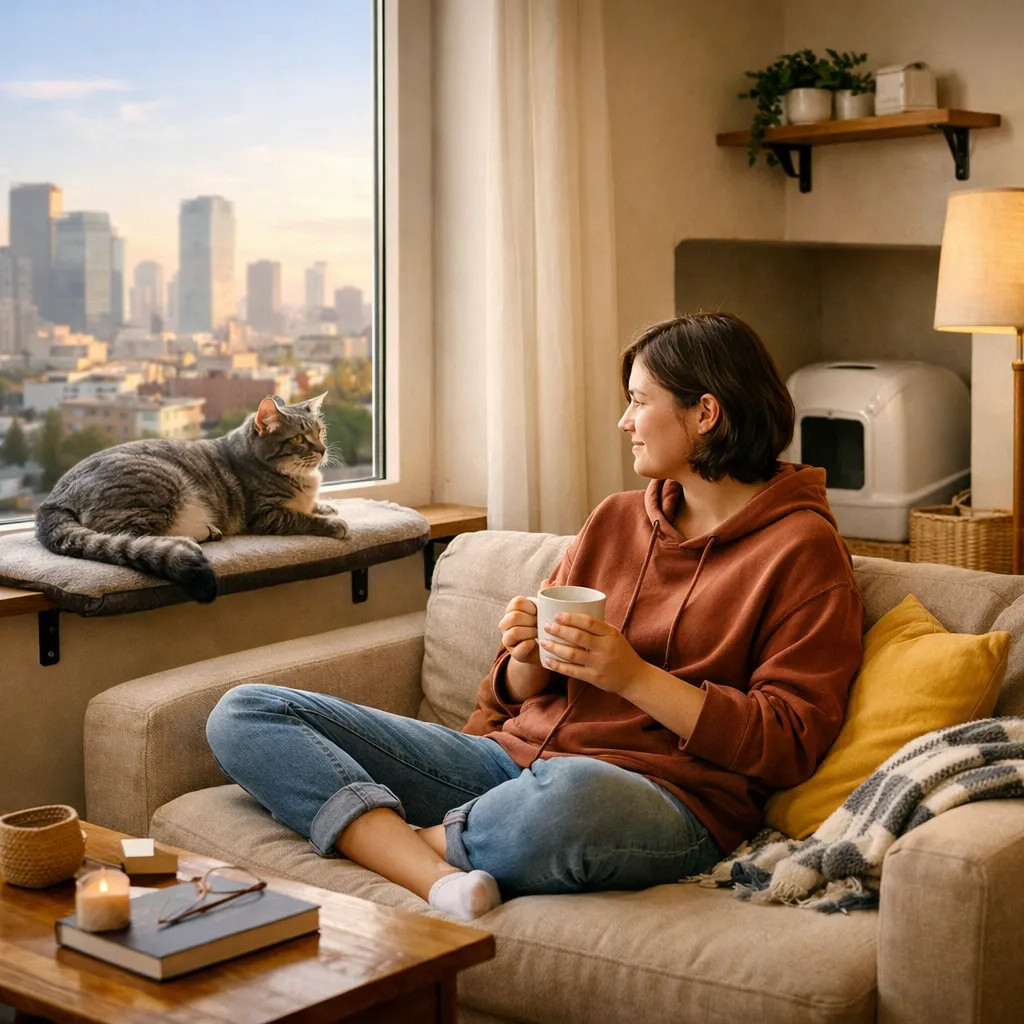
You love your cat, but let’s be honest: apartment living problems with cats are very real. From echoey meows in thin‑walled buildings to litter box smell in a 400‑square‑foot studio, even the sweetest indoor cat can accidentally turn small‑space life into a daily challenge.
Maybe your neighbors complain about nighttime zoomies, your landlord worries about scratches and damage, or you feel guilty that your indoor cat doesn’t have a backyard to explore. You’re not a bad cat parent — apartment living simply magnifies every little problem, for you and for your cat.
In this guide, we’ll walk through 20 of the most common apartment living problems with cats and exactly how to fix each one. With a few smart tweaks, you can keep your indoor cat happy, protect your security deposit, and actually enjoy sharing a small apartment together.
1: Common Apartment Living Problems With Cats
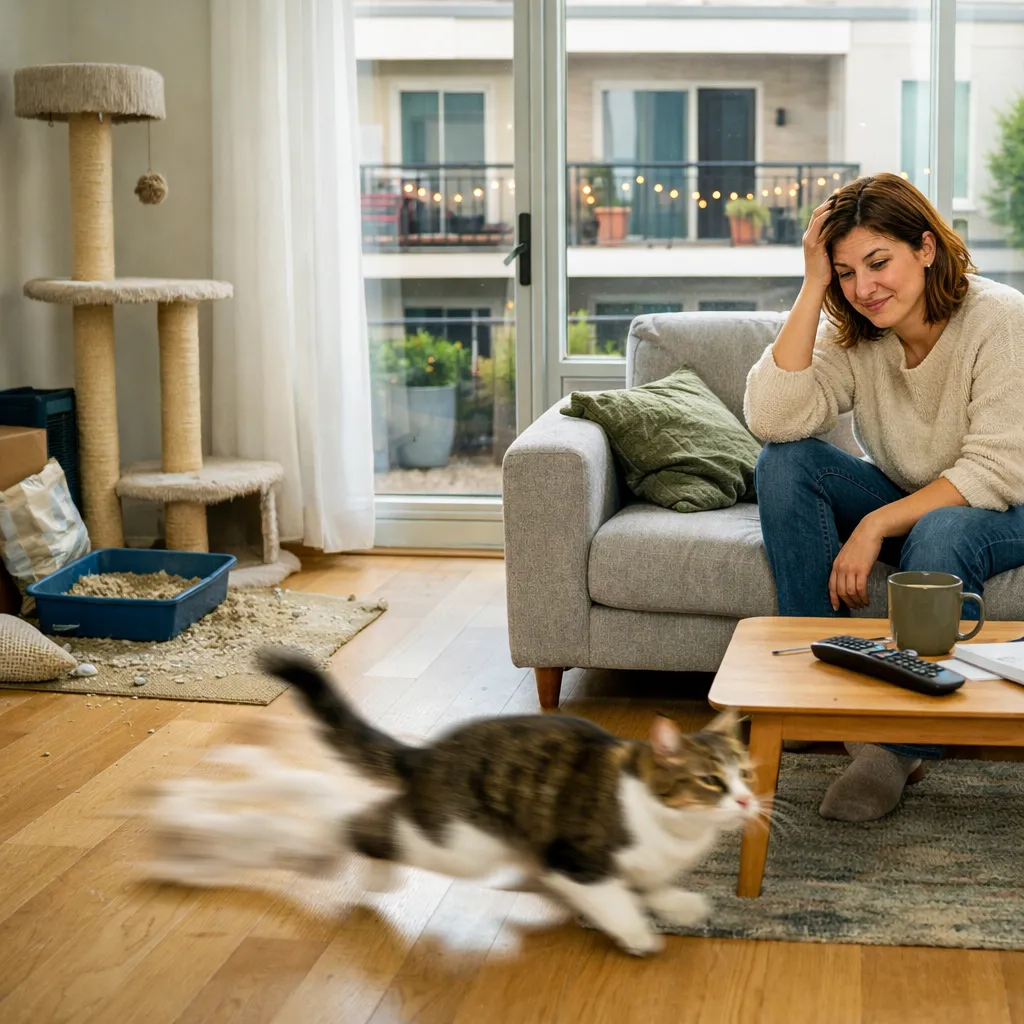
Sharing a small apartment with a cat can feel cozy, but it also amplifies every little problem. When space is limited, indoor cats in apartments are more likely to get bored, zoomy, or destructive simply because they don’t have enough ways to move, climb, and explore.
In this first section, we’ll look at the most common space‑related apartment living problems with cats — and how to turn even a tiny studio into a cat‑friendly home without sacrificing your own comfort.
Problem 1 – Not Enough Space for a Cat in a Small Apartment
At first glance, it can feel like your studio is “too small” for a cat, especially if you barely have room for your own furniture. The good news is that cats don’t measure territory in square footage; they care more about access, predictability, and having a few safe spots that are truly theirs.
How to fix it:
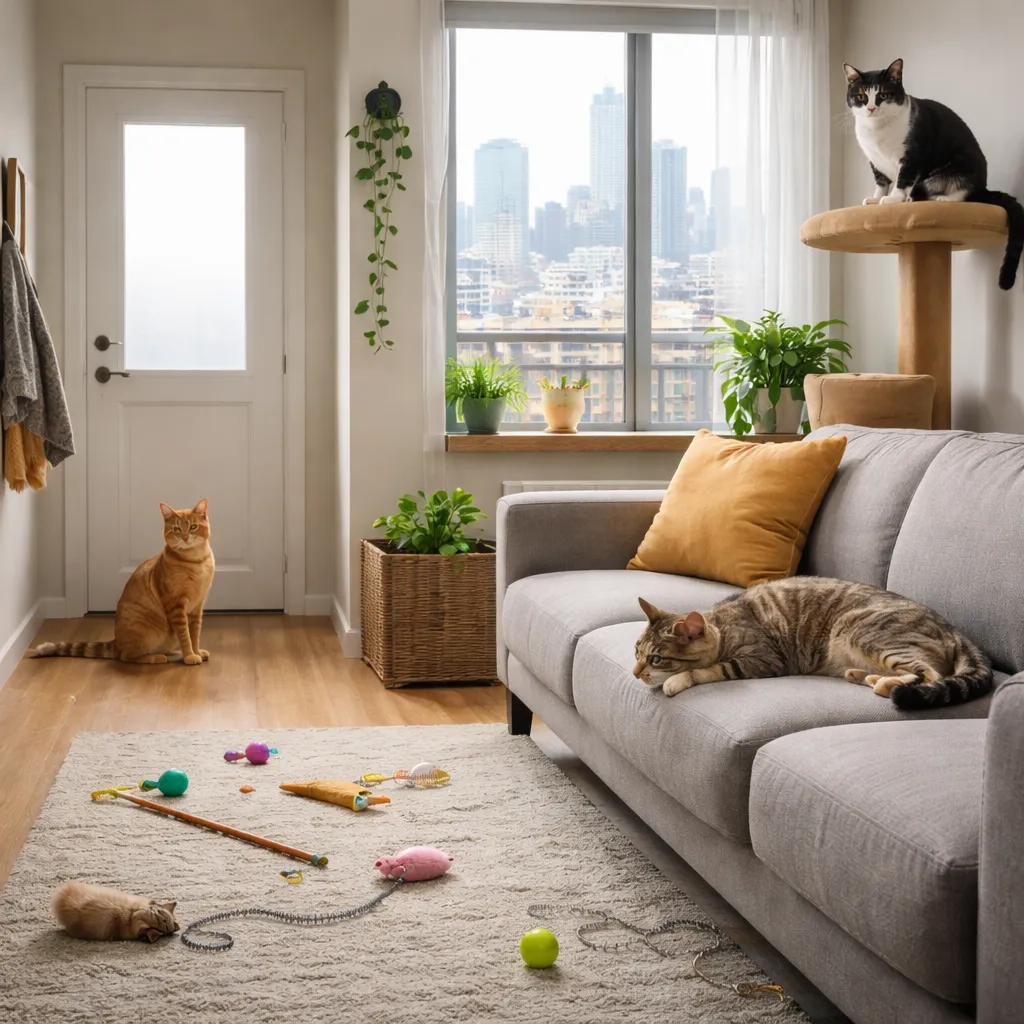
Break your small apartment into “zones” for your cat: one for resting, one for eating, one for litter, and one for play.
Give your cat at least a few dedicated spots (like a bed on a shelf or a cozy corner) that humans don’t use, so they feel like they own some of the space.
Keep walkways clear and avoid clutter on the floor; a tidy layout instantly makes a small apartment feel bigger for both you and your cat.
Problem 2 – Indoor Cats in Apartments With No Vertical Space
One of the biggest apartment living problems with cats is a lack of vertical space: no shelves to climb, no tall furniture, and nowhere to jump except the couch. Cats are natural climbers and feel safer when they can perch up high to watch their “territory,” especially in busy or noisy buildings.
How to fix it:
Add vertical territory with wall‑mounted cat shelves, a tall but narrow cat tree, or a window perch that doesn’t take much floor space.
Use the tops of wardrobes, bookshelves, or refrigerators as cat highways by clearing them off and adding a non‑slip mat or bed.
Make sure there are at least two or three different heights your cat can reach, so they can choose how “high up” they want to be, depending on their mood.
Problem 3 – No Outdoor Access for Indoor Apartment Cats
Many apartment cats never get outdoor access, which can leave you wondering if your indoor cat in an apartment is missing out on “real cat life.” Without sunlight, fresh air, and new smells, some indoor cats become frustrated, under‑exercised, or obsessed with trying to bolt through the door.
How to fix it:
Create a “window world” with a secure perch, a view of trees or streets, and maybe a bird feeder outside (where allowed) to provide safe entertainment.
Offer indoor versions of outdoor fun: regular wand‑toy play, food puzzles, and short daily exercise sessions of 10–15 minutes help burn energy and mimic hunting.
If it’s safe and permitted, consider harness training, a secure catio, or supervised hallway walks so your cat gets small, controlled tastes of the outside world.
2: Litter Box Problems in Small Apartments
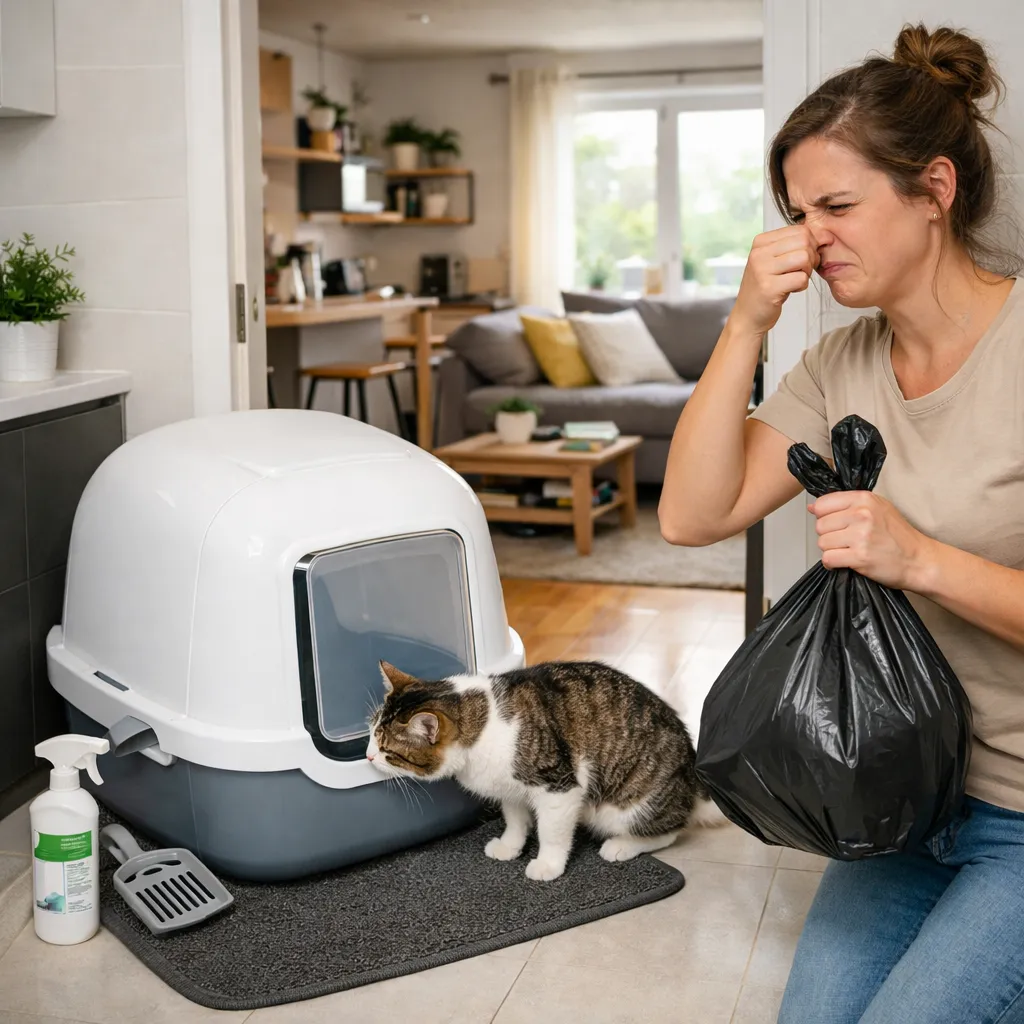
When you live in a small apartment with cats, litter box problems stop being “a corner issue” and quickly take over the whole home. Smell, placement, and tracking become apartment living problems with cats that you feel every single day, not just when you scoop the box.
In this section, you’ll see exactly how to deal with litter box smell in a small apartment, where to put an apartment cat litter box, and how to stop litter tracking from covering your limited floorspace.
Problem 4 – Litter Box Smell in a Small Apartment
In a tiny studio, one bad poop can make it smell like the whole place is the litter box. Even if you’re a clean person, poor ventilation and the wrong litter can turn normal cat odors into a constant background stink that’s hard to ignore.
How to fix it:
Scoop more often than you think: aim for at least twice a day, and right after big “events” when you’re home.
Use a good clumping, low‑dust, unscented litter that traps moisture and makes it easy to remove odor sources quickly.
Fully empty and wash the litter box with mild, unscented cleaner every 1–2 weeks, then refill with fresh litter instead of endlessly topping it up.
Add extra odor control outside the box, like a tightly closed trash can for used litter bags, baking soda nearby, or an air purifier if your budget allows.
Problem 5 – No Good Place for an Apartment Cat Litter Box
In a small apartment, it can feel like there is literally no “right” place for the litter box: the bathroom is tiny, the bedroom feels wrong, and you don’t want it in the kitchen. If you hide it too much, your cat might avoid it; if you place it in the open, you’re stuck seeing and smelling it all day.
How to fix it:
Look for spots that balance three things: privacy for your cat, fresh air or airflow, and easy access for cleaning, such as near a ventilated bathroom, by a sliding door, or in a corner of the hallway.
Avoid “worst spots” like right next to noisy machines, in humid bathrooms with no ventilation, or jammed behind large furniture where your cat feels trapped.
Use furniture‑style litter box cabinets or screens so you can keep the box close to main areas without staring at it every time you sit down.
In very small studios, it’s often better to place the box in a visible but well‑ventilated corner you can keep spotless than to hide it in a dead, stuffy spot that traps smells.
Problem 6 – Litter Tracking All Over Your Apartment
Litter tracking is one of those apartment cat problems that sounds small until you step on gritty pieces barefoot every time you cross the room. In a compact space, a few scattered grains can quickly turn into a full‑on trail from the litter box to your bed, couch, and kitchen.
How to fix it:
Place a litter mat or small textured rug under and in front of the litter box to catch granules as your cat steps out.
Choose low‑dust litter; the less dust on your cat’s paws and fur, the less they’ll carry around the apartment.
Keep the box away from the main traffic path in the apartment so any stray litter stays in one small zone that’s easy to sweep or vacuum.
Make quick floor clean‑ups part of your routine: a small handheld or robot vacuum parked near the litter area can save you from constantly chasing tiny pieces by hand.
3: Noise, Neighbors, and Apartment Cat Complaints
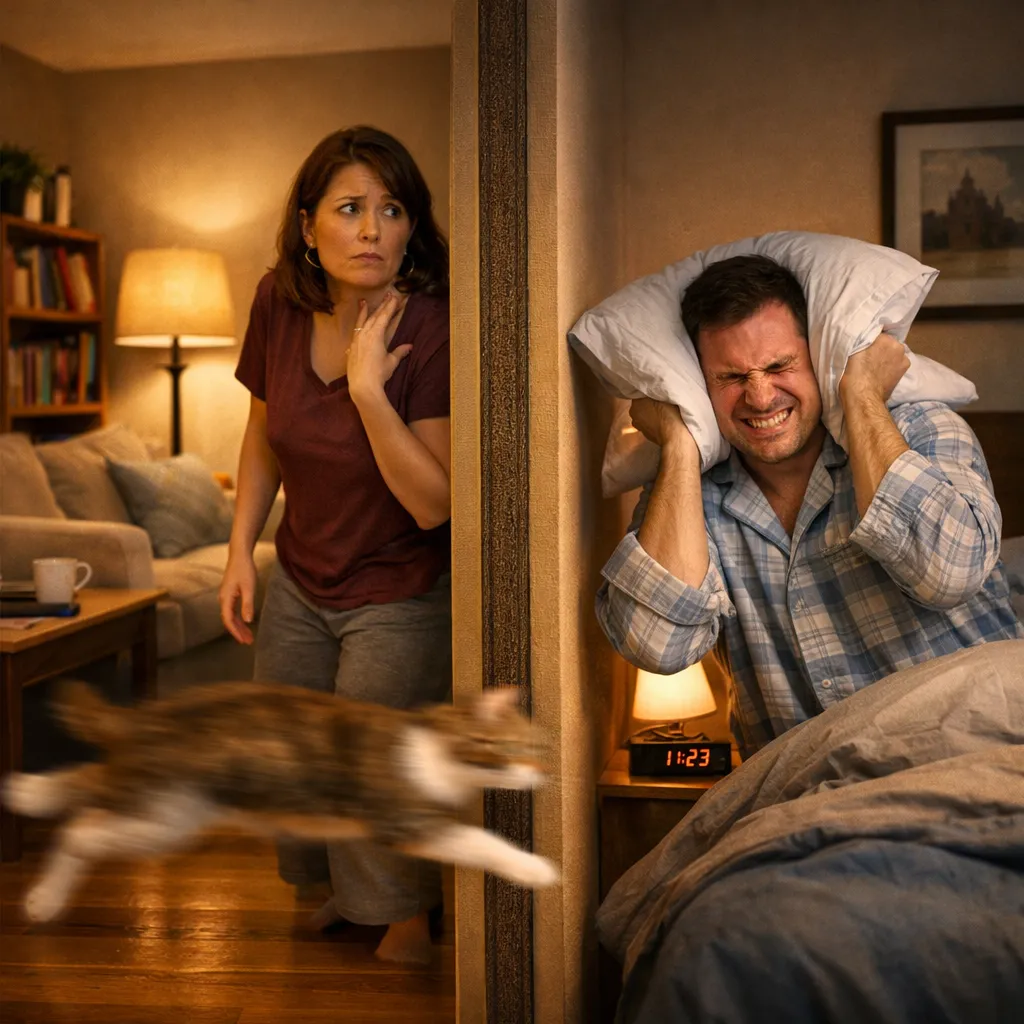
Noise is one of the most stressful apartment living problems with cats, because it doesn’t just affect you — it affects your neighbors and even your relationship with your landlord. Thin walls, echoey hallways, and hard floors can turn normal cat sounds into something that feels much louder than it really is.
In this section, we’ll tackle meowing, midnight zoomies, and scratching noise so you can stay on good terms with your neighbors and still let your cat be a cat.
Problem 7 – Cat Meowing in an Apartment With Thin Walls
A chatty cat is cute until you live in a building where every meow echoes through the hallway at 3 a.m. Constant meowing in an apartment with thin walls can lead to complaints, awkward conversations, and a lot of anxiety about what your neighbors think.
How to fix it:
First, rule out medical issues with your vet, especially if the meowing is new, sudden, or happens mostly at night.
Make sure your cat’s basic needs are met on a routine: predictable feeding times, play sessions, and clean litter can reduce anxiety‑driven vocalizing.
Avoid rewarding attention‑seeking meows; instead, wait for a quiet moment, then offer play, treats, or affection so your cat learns that calm behavior gets results.
If your cat is meowing at specific triggers (like hallway noises), try white noise or a fan in your bedroom to buffer sounds so both you and your neighbors sleep better.
Problem 8 – Loud Cat Zoomies and Neighbors Complaining About Cat Noise
Midnight zoomies can sound like a herd of elephants when you live above someone else. Neighbors may complain about thumping paws, jumping off furniture, or racing laps across hardwood floors, even though your cat is just burning off normal energy.
How to fix it:
Schedule an intense play session in the evening, about an hour before your usual bedtime, using wand toys or chase games to drain your cat’s energy in a controlled way.
Add rugs, runners, or carpet tiles in your cat’s main zoomie paths to soften impact noise and reduce echo through the floor.
Close off especially noisy rooms at night (like the hallway above a neighbor’s bedroom) and encourage your cat to stay in carpeted or softer areas instead.
If complaints keep coming, talk calmly with your neighbor and let them know you’re actively working on solutions — this can lower tension and buy you goodwill while training and routines start to help.
Problem 9 – Scratching Doors and Walls in a Rental Apartment
Scratching is a normal cat behavior, but in a rental apartment, it can turn into visible damage on doors, frames, and walls — and that means stress about your security deposit. The noise of scratching can also be annoying for neighbors, especially if your cat likes to claw at doors at night.
How to fix it:
Place sturdy scratching posts or pads right next to the doors and walls your cat targets, and reward them every time they choose the “legal” scratching spot.
Use protective solutions like clear door guards, corner protectors, or sticky tape on high‑risk areas until your cat’s scratching habit reliably shifts to posts.
Keep claws trimmed regularly, or ask your vet/groomer for help if you’re not confident doing it yourself; shorter claws make less damage and less noise.
For existing wall damage, simple repairs with filler and paint before you move out can greatly reduce what your landlord may charge.
4: Safety Issues for Indoor Cats in Apartments
Apartment living with cats comes with safety risks you might not notice at first, especially around high windows, balconies, and the front door. In a small space, one unsecured window or a toxic houseplant can quickly turn into a serious emergency for your indoor cat.
This section covers the biggest apartment cat safety issues — falls, escapes, and hidden toxins — and how to keep your indoor cat safe without turning your home into a fortress.
Problem 10 – Open Windows, Balconies, and Apartment Cat Safety
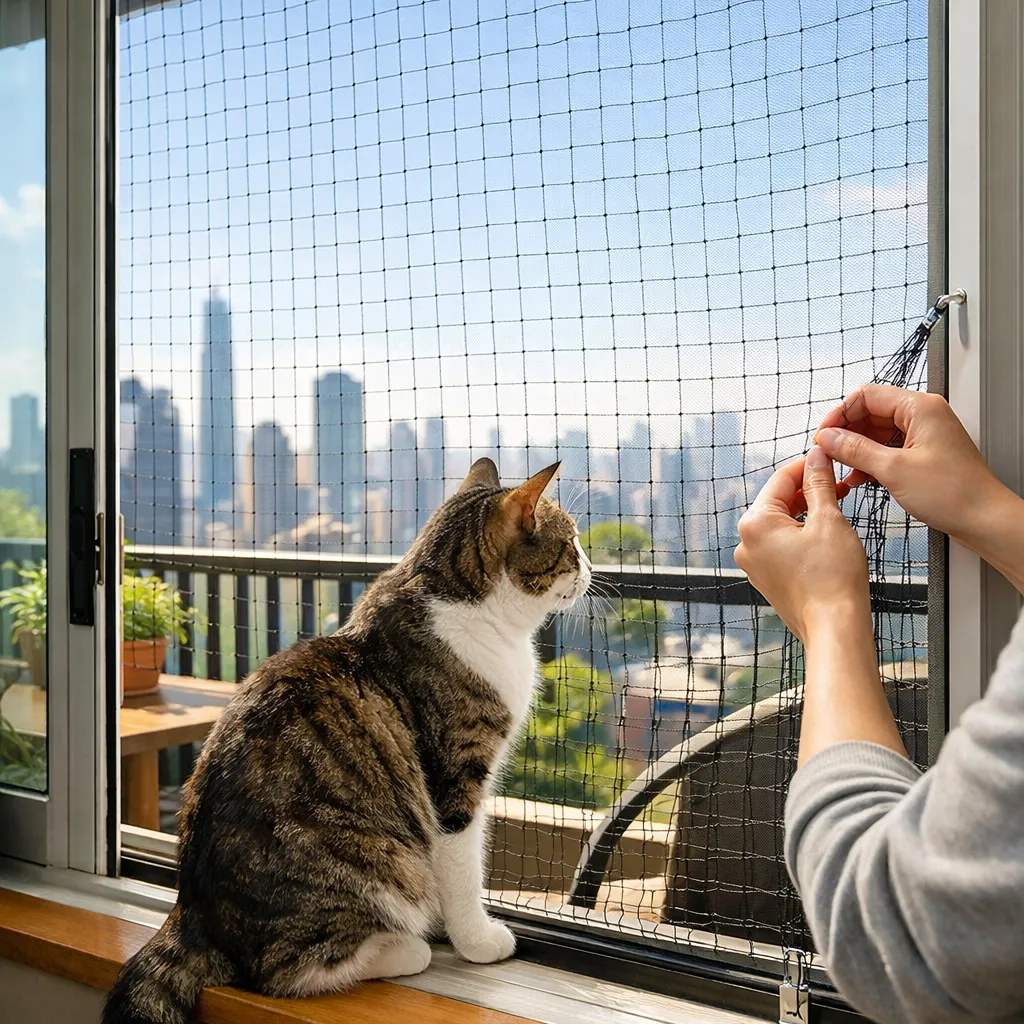
Many indoor cats love to sit in an open window or on a balcony rail, but one loud noise or a sudden bird can send them leaping straight through a weak screen. High‑rise syndrome (falls from upper floors) is a real risk for apartment cats, and regular fly screens are nowhere near strong enough to keep them safe.
How to fix it:
Install cat‑safe window screens or balcony nets designed to handle a cat’s weight, claws, and jumping, with tight mesh and strong mounting hardware.
Make sure balcony netting runs from floor to ceiling with no gaps larger than about 2 inches, so your cat can’t squeeze through or get stuck.
Close windows when you’re not home, especially ones near “launch pads” like tables, beds, or shelves your cat can jump from.
If you rent, get written permission from your landlord and emphasize that cat‑proofing windows and balconies also protects their property from emergency damage.
Problem 11 – Escape‑Artist Cats Bolting Out the Apartment Door
Some cats treat every door opening like a chance to sprint into the hallway or down the stairs. In an apartment building with other pets, people, and traffic, a bolting cat can get lost, injured, or stuck somewhere you can’t reach.
How to fix it:
Train your cat to go to a specific “safe spot” (like a stool, mat, or cat tree) every time you approach the door, then reward them with treats so they learn to run there instead of toward the hallway.
Create a physical barrier by adding a baby gate, screen door, or even a piece of furniture near the entrance to break the straight path to the outside.
Keep a collar with an ID tag on your cat and make sure they’re microchipped with up‑to‑date contact details, just in case they ever do slip out.
Ask guests and delivery people to wait while you pick up or distract your cat before you open the door fully.
Problem 12 – Toxic Houseplants and Hazards in a Small Apartment
In a small apartment, your cat is always close to your plants, cleaning products, and decor, which makes toxic items much harder to keep “out of reach.” Many popular houseplants and everyday products can be dangerous to cats, causing anything from stomach upset to organ damage.
How to fix it:
Check every plant in your home against a trustworthy list of houseplants poisonous to cats and remove high‑risk ones like lilies, dieffenbachia, pothos, and sago palm.
Store cleaning chemicals, medications, and sharp objects in closed cabinets, not on open shelves or under sinks that your cat can access.
Choose pet‑safe alternatives wherever possible — from non‑toxic plants to enzyme‑based cleaners that are safer around curious paws.
In a very small space, it’s often easiest to keep only cat‑safe plants and decor so you don’t have to constantly worry about where your cat is climbing or chewing.
5: Lifestyle and Behavior Problems With Apartment Cats
Even when you’ve solved space and litter issues, lifestyle and behavior can still make apartment living with cats feel exhausting. Boredom, loneliness, and multi‑cat tension often show up as “annoying” behavior, but they’re really your cat’s way of saying their needs aren’t fully met in a small indoor world.
This section looks at bored indoor cats in apartments, lonely single cats when you’re gone all day, and the extra challenges of living with multiple cats in a small apartment.
Problem 13 – Bored Indoor Cats in Apartments
A bored indoor cat in an apartment doesn’t always look “sad” — they might zoom around, knock things off shelves, over‑groom, overeat, or sleep way more than usual. Without enough mental and physical stimulation, apartment cats can develop stress‑related behaviors like aggression, excessive vocalizing, or destructive scratching.
How to fix it:
Build a simple daily play routine: 10–15 minutes of active play with a wand toy or chase game once or twice a day is far more effective than random, short bursts.
Rotate toys instead of leaving everything out at once; hiding and re‑introducing toys makes them feel “new” and more exciting for your cat.
Enrich your cat’s environment with window perches, cardboard forts, puzzle feeders, and new textures or hiding spots so their world feels bigger without adding square footage.
Problem 14 – Lonely Single Cats When You’re Gone All Day
Many people assume cats don’t get lonely, but some apartment cats struggle when they spend most of the day alone in a quiet, small space. Signs can include clinginess when you’re home, excessive meowing when you leave, changes in appetite, or destructive behavior that happens only when you’re out.
How to fix it:
Keep your departures and arrivals calm and predictable so your cat doesn’t learn to associate you leaving with big emotional reactions.
Before you go to work, combine a short play session with breakfast in a puzzle feeder so your cat’s day starts with both bonding and a “hunting” challenge.
Leave background sound (like a radio or white‑noise playlist) and safe window views to make the apartment feel less empty and more interesting.
If your cat is very lonely, talk to your vet or a behaviorist about whether a second cat or a more structured enrichment plan could help, rather than rushing into another pet.
Problem 15 – Living With Multiple Cats in a Small Apartment
Multiple cats in a small apartment can be wonderful, but a tight space makes tension more likely: more staring, blocking doorways, and competing for litter boxes or favorite spots. Without enough resources and escape routes, apartment cats may develop subtle bullying, inappropriate urination, or full‑on fights.
How to fix it:
Follow the N+1 rule for resources: have one more litter box than the number of cats, plus multiple feeding and resting spots so no one gets trapped or pushed away.
Use vertical space (shelves, cat trees, window perches) to create “lanes” and observation points where cats can avoid each other without feeling cornered.
Watch for early signs of tension like staring, blocking paths, or one cat always hiding, and adjust layouts or add resources before conflicts escalate.
6: Landlords, Pet Policies, and Money Stress
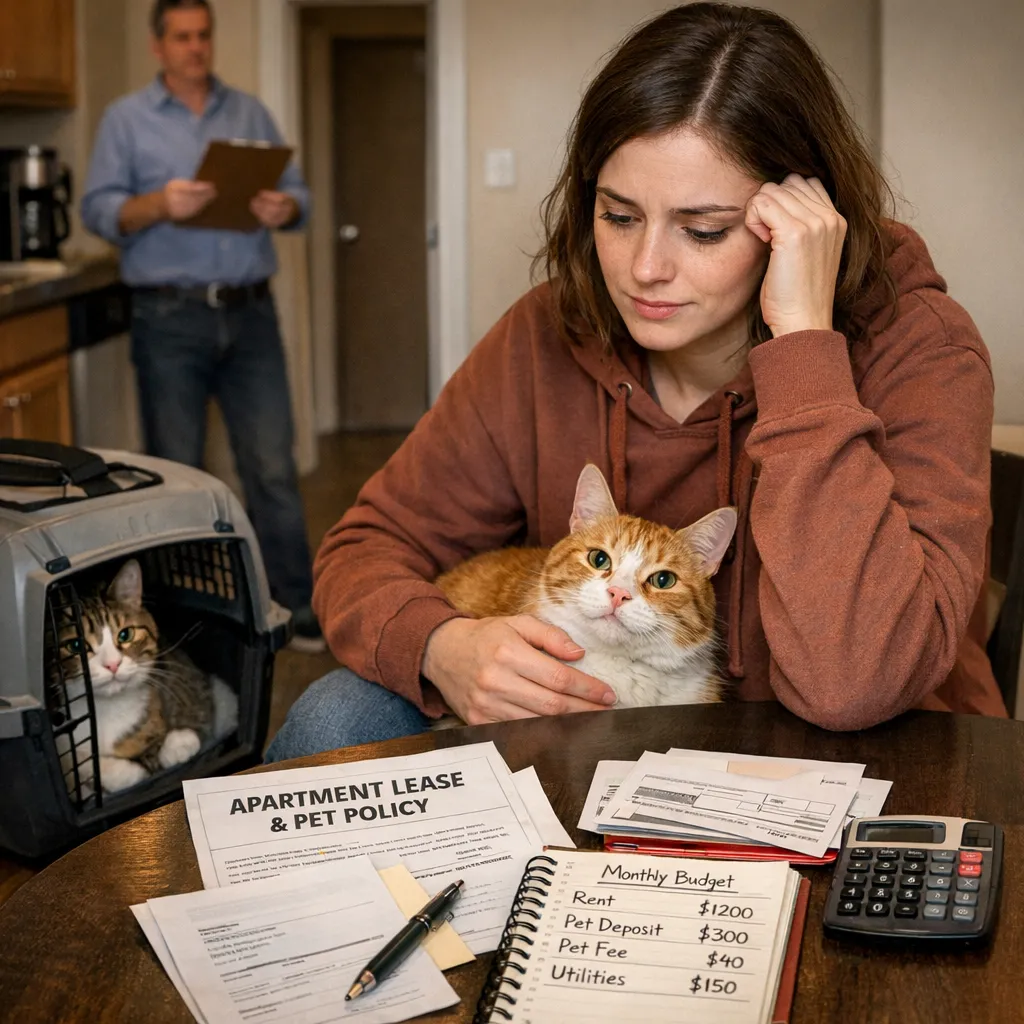
Even if your cat is perfectly behaved, apartment living problems with cats can follow you into your lease, your security deposit, and your monthly budget. Pet deposits, pet rent, and worries about cat damage all add financial and emotional stress to small‑space cat ownership.
This section walks through the most common money and landlord issues — so you can protect both your wallet and your relationship with your building.
Problem 16 – Pet Policies, Fees, and Deposits for Apartment Cats
Many renters are shocked when they realize how much pet deposits, non‑refundable pet fees, and monthly pet rent can add to the cost of living with a cat. Policies vary wildly between buildings, and confusing language can make it hard to know what you actually owe and what you might get back.
How to fix it:
Before you sign, read the pet section of your lease carefully so you know the difference between a refundable pet deposit, a one‑time pet fee, and ongoing pet rent.
Ask questions in writing (email) if anything is unclear and save the answers, so you have proof later of what was promised.
When apartment hunting with a cat, compare total monthly cost, not just base rent; sometimes a slightly higher rent with low pet fees is cheaper overall.
If you have an emotional support or service animal, learn your local Fair Housing rules, because in many places they’re exempt from extra pet fees (though you still must follow behavior rules).
Problem 17 – Damage, Claw Marks, and Your Security Deposit
Scratches on doors, chewed blinds, and stained carpets can all threaten your security deposit, especially if your landlord is already wary of pets. Some renters only think about this when they’re moving out, but by then, it may be too late — or too expensive — to fix easily.
How to fix it:
Cat‑proof in advance: use scratch protectors on doors and furniture, washable throws on sofas, and easy‑to‑clean rugs in high‑traffic areas your cat loves.
Fix small damage as it happens (like minor wall scratches or loose carpet threads) instead of waiting; this often costs less than what a landlord or contractor will charge later.
Keep photos of the apartment when you move in and after you make repairs, so you can show the difference if there’s a dispute over what your cat actually damaged.
If you know a specific item is already worn or fragile, email your landlord about its condition early so it doesn’t get blamed entirely on your cat at move‑out.
Problem 18 – Apartment Hunting With a Cat Is Stressful
Finding a cat‑friendly apartment that also fits your budget and location can feel like a full‑time job. Some listings say “no pets,” others limit the number of cats, and many add high pet deposits or pet rent that knock otherwise perfect places off your list.
How to fix it:
Start your search early and use filters for “cat‑friendly” or “pets allowed,” then double‑check details directly with the landlord or manager before you apply.
Prepare a simple “cat resume” with vet records, spay/neuter proof, and a short note about your cat’s behavior to show you’re a responsible tenant.
Prioritize buildings with pet‑friendly amenities (like durable flooring and clear pet rules), even if they’re slightly further from your ideal location; they’re often less stressful long‑term.
If you have multiple cats, consider smaller or private landlords, who sometimes have more flexible rules than large, corporate apartment complexes.
7: Is Apartment Living With Cats Cruel – or Can It Work?
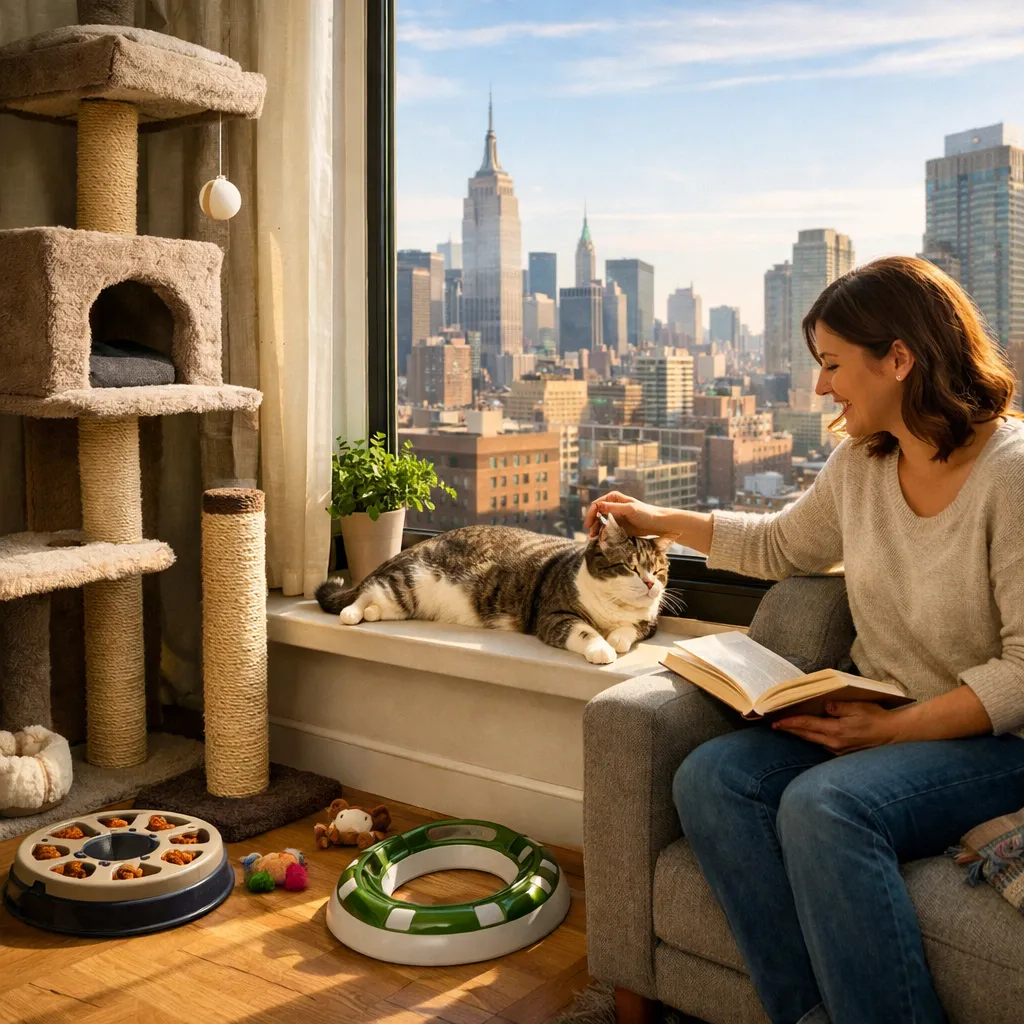
Many cat parents quietly worry that keeping a cat in a small apartment is unfair, especially if their cat never goes outside. The truth from vets and welfare organizations is that cats can be perfectly happy as indoor apartment cats — as long as their physical and emotional needs are met with enough space, enrichment, and routine.
In this final section, we’ll tackle the guilt and big questions around apartment living problems with cats and show how a well‑set‑up small home can actually keep your cat safer and more content than a risky outdoor life.
Problem 19 – Feeling Guilty About Keeping a Cat in an Apartment
It’s very common to feel guilty that your cat doesn’t have a yard, a garden, or endless rooms to explore. Online debates about whether it’s “cruel” to keep a cat in an apartment can make loving owners feel judged, even when they’re doing their best.
How to reframe it:
Remember that most welfare groups and many vets now recommend keeping cats indoors or in secure spaces because outdoor cats face cars, predators, cruelty, and a much shorter life expectancy.
Focus on what you can control: a safe, enriched indoor environment with places to climb, hide, scratch, and play often meets a cat’s needs better than unmanaged outdoor access.
Notice your own cat’s behavior: relaxed body language, normal eating and grooming, playful curiosity, and regular sleep cycles are all signs your indoor apartment cat is actually doing well.
If guilt pops up, use it as a prompt to add one small improvement — a new window perch, a 10‑minute play block, or a DIY puzzle feeder — rather than as a reason to feel like you’re failing.
Problem 20 – Balancing Apartment Living Problems With Cats and a Happy Indoor Life
It can feel overwhelming to juggle all the apartment living problems with cats: noise, neighbors, litter, safety, boredom, and money. When you’re tired or stressed, it’s easy to worry that your cat is unhappy too — or that you’ll never get the balance right.
How to fix it:
Think in terms of pillars instead of perfection: if your cat has reliable food and water, a clean litter box, vet care, safe places to rest and hide, and daily interaction, you’re already covering the essentials.
Build tiny, sustainable habits rather than big, one‑off changes — like a 10‑minute play session every evening, a weekly toy rotation, or a monthly “apartment cat audit” where you tweak one small thing.
Accept that apartment life will never be 100% problem‑free, but each solved issue (like better litter setup or safer windows) makes a huge difference in both your stress and your cat’s quality of life.
When in doubt, check in with your vet or a qualified behaviorist; they can help you spot stress signs early and suggest simple adjustments tailored to your specific indoor cat and apartment.
Final Thoughts: Apartment Life Your Cat Can Actually Enjoy
Apartment living problems with cats can feel huge in a small space, but most of them have simple, realistic fixes. When you combine smart litter box habits, better use of vertical space, daily enrichment, and clear communication with your landlord and neighbors, your indoor cat can be safe, happy, and genuinely content in your apartment.
Frequently Asked Questions About Apartment Living Problems With Cats
Is it okay to keep a cat in a small apartment?
Yes. Most cats adapt well to apartment living as long as they have a clean litter box, places to climb and hide, daily playtime, and regular vet care.
How do I keep my indoor cat happy in an apartment?
Focus on vertical space, daily play sessions, puzzle feeders, and window views so your indoor cat has plenty of chances to climb, scratch, explore, and “hunt” even in a small apartment.
Where should I put a litter box in a small apartment?
Choose a well‑ventilated, easily accessible spot that offers your cat some privacy but is still easy for you to clean, like a bathroom corner, hallway nook, or furniture‑style litter box cabinet.
How can I stop my cat from bothering the neighbors in an apartment?
Tire your cat out with evening play, add rugs to reduce noise, manage meowing with routine and enrichment, and talk openly with neighbors so they know you’re working on the problem.
Is apartment living with cats cruel?
No. A safe, enriched indoor apartment is often much safer and less stressful for cats than unsupervised outdoor access, which comes with traffic, predators, and other risks.